
Mental Health
By: CertaPet Staff
It’s no secret that the events of 2020 dredged up a slew of uncomfortable feelings like fear, sadness, anxiety, and stress for many Americans. It’s fair to say that collectively, America’s mental health has been drained from battling the deadly COVID-19 virus. Compounding things, increased isolation has prevented us from finding outlets to speak about mental health issues and seek professional help.
The deterioration of mental health in America, exacerbated by the pandemic, has prompted a new (but tired) wave of advocacy for de-stigmatization, improved access to care, and open dialogue around the unseen suffering that so many face but are afraid to admit. What’s more, this isn’t the first time Americans have cried out for the betterment of the country’s broken mental health care system.
Mental health in America has been dogged by a nightmarish history of failure. Patients have been cast aside, either in prisons, institutions, or the streets. Unsafe and controversial procedures have been attempted on unwilling or unassuming patients. Medications have had mottled results and been priced far out of reach of the average consumer. The public has cast an unapproving eye on those with illnesses they can’t control.
Thankfully, over the years, mental illnesses have slowly become more supported and understood. However, we still have a long way to go. From criminalization of mental health to mounting costs for prescriptions and therapy, roadblocks remain between Americans in mental decline and the help they need—whether it be an emotional support animal, a life-altering medication, or just a friendly face.
Of course, some states are more progressive than others in providing care for those who seek it. In pursuit of charting the landscape for mental health in America, we at CertaPet analyzed the 50 most populous cities to find out which are the best for mental health treatment.
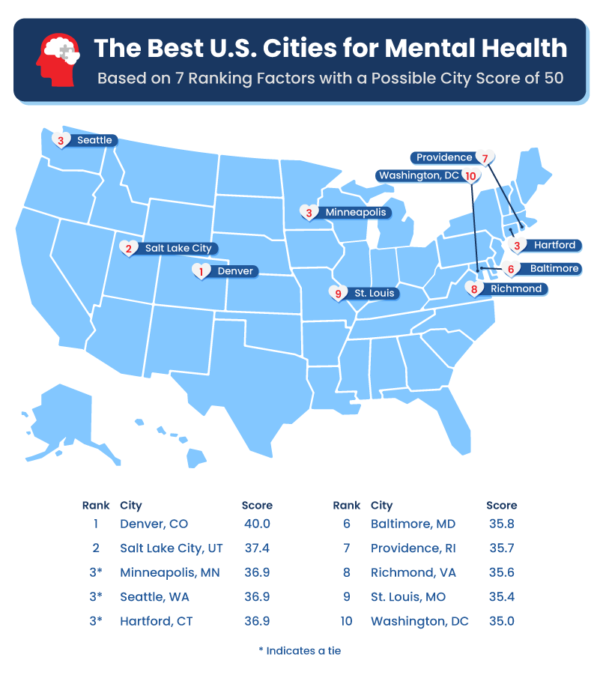
Our analysis has revealed that there is still work to be done to make caring for mental conditions as common as casting a broken bone. Yet, it also showcased several shining examples of progression toward that very goal.
Regardless of where you live, it’s important to remember that you deserve adequate and appropriate mental health care no matter your condition. And if you believe an emotional support animal or psychiatric service dog might be part of your ideal care plan, we have education and resources that can help you make that determination.